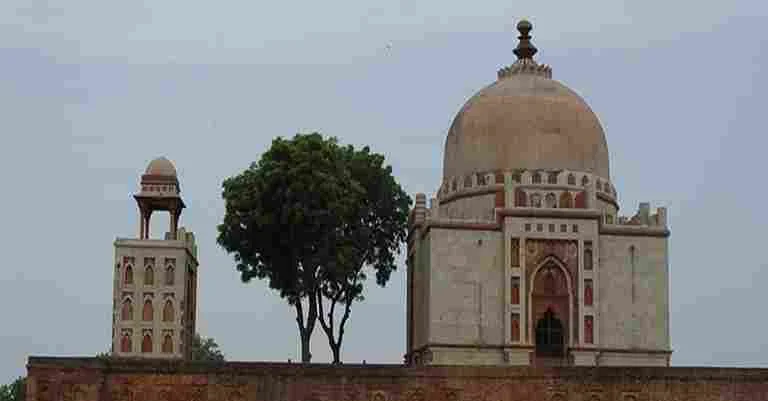
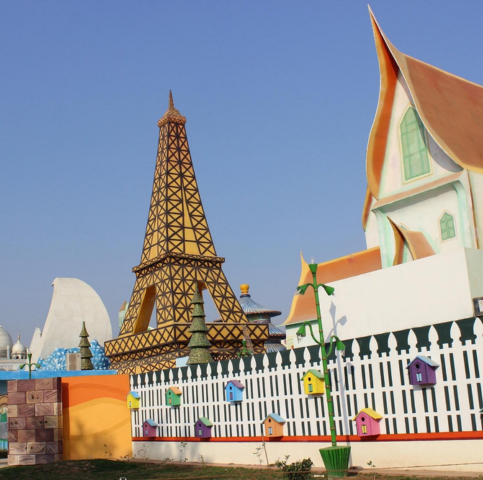
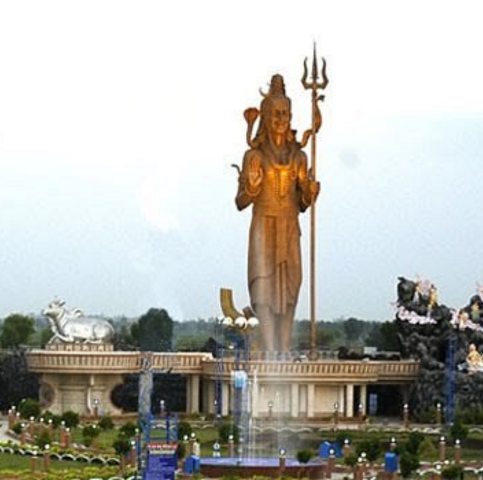
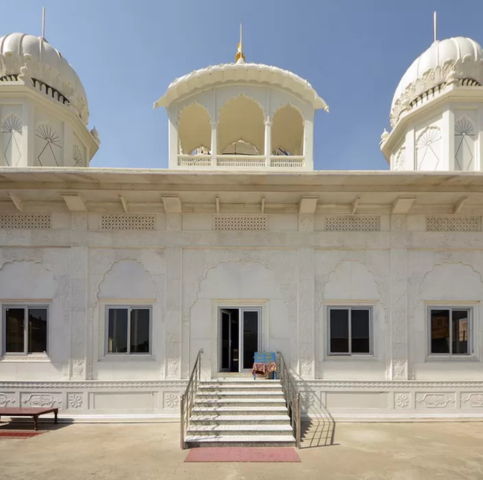
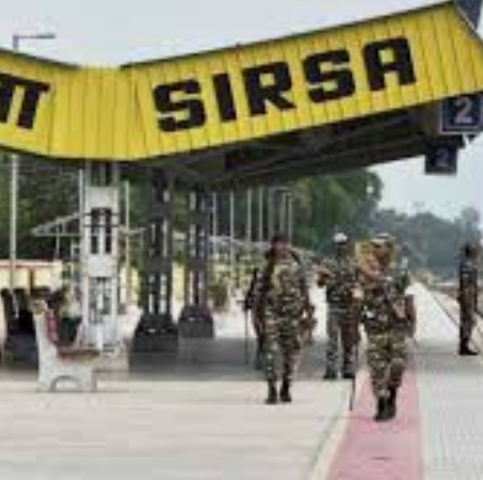
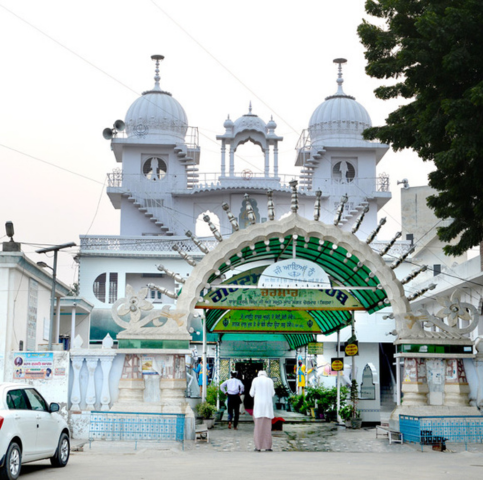
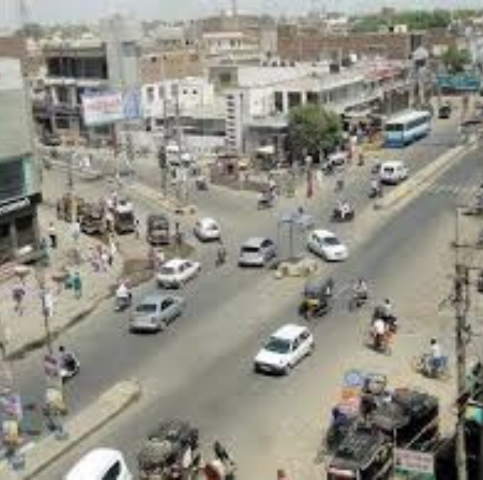
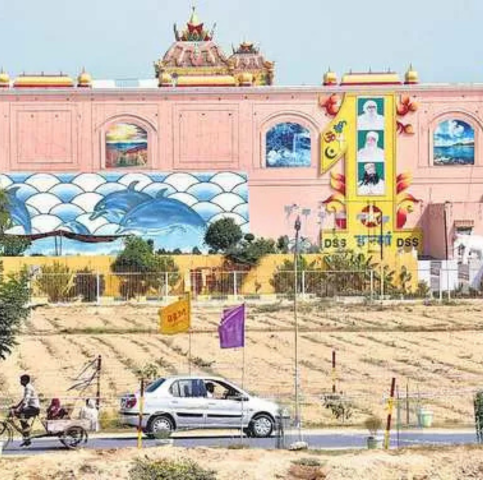
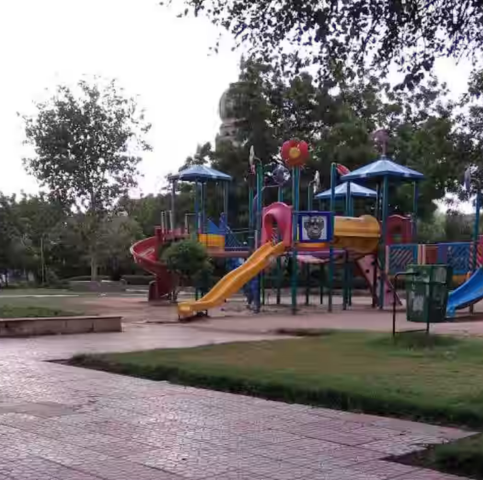
Sirsa is a charming and historic city in Haryana, known for its peaceful environment, cultural richness, and religious importance. Located near the borders of Punjab and Rajasthan, the city reflects a beautiful blend of Haryanvi and Punjabi traditions.When exploring Sirsa, visitors can experience spiritual calm at Dera Sacha Sauda and Tara Baba Kutia, both popular religious destinations attracting devotees from different regions. For relaxation, Bhadra Park offers a pleasant green space perfect for evening walks and family outings.Sirsa is also surrounded by vast agricultural fields, giving visitors a glimpse of rural Haryana’s natural beauty and farming lifestyle. The local markets are lively and showcase traditional foods, clothing, and daily essentials.
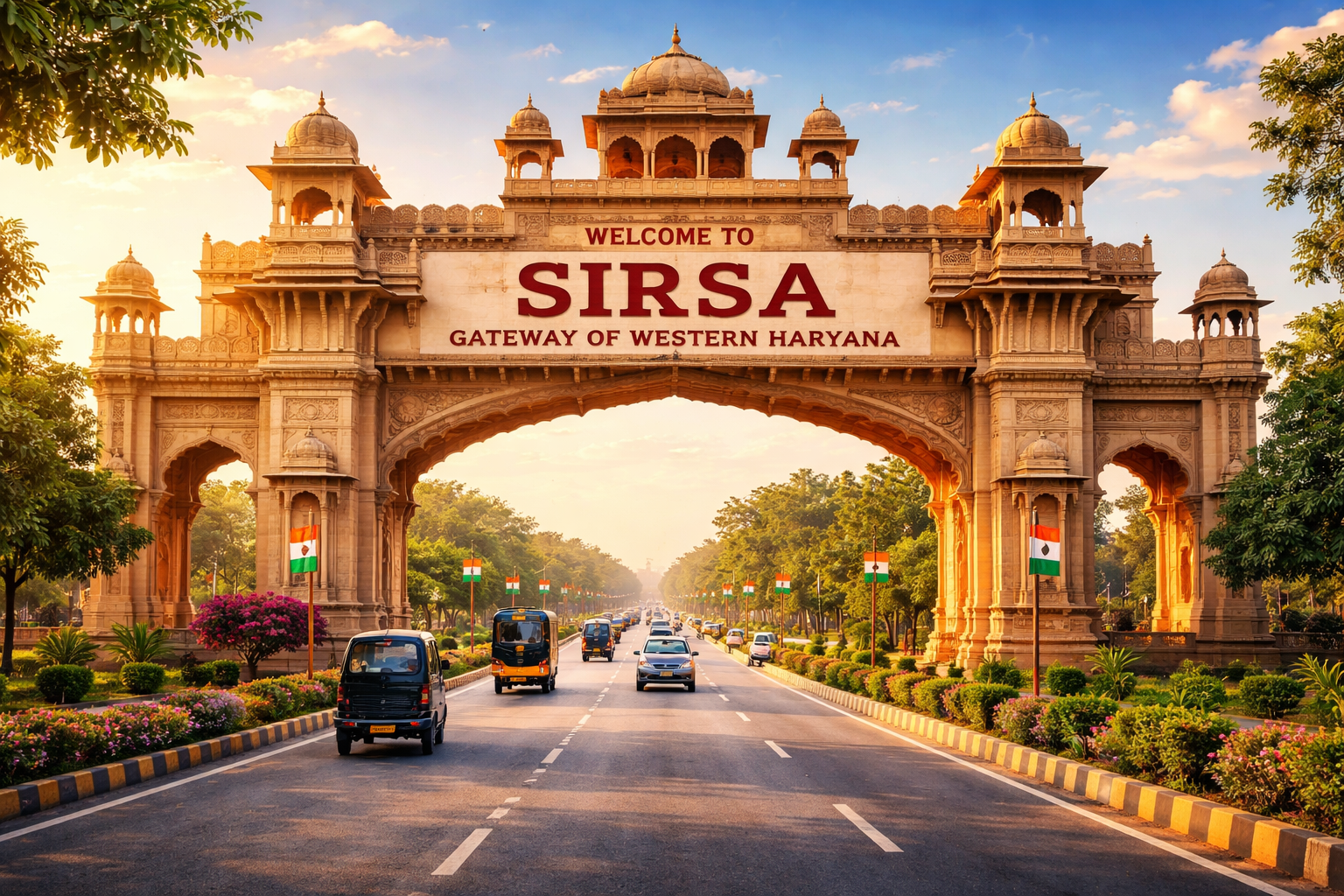
Gateway of Western Haryana
The gateway symbolizes Sirsa’s importance in transportation, agriculture, and regional development. Major highways and railway lines pass through the city, making it a key link between Haryana and neighboring states. Visitors entering Sirsa are welcomed by wide roads, green surroundings, and a blend of traditional and modern architecture.
Being the Gateway of Western Haryana also highlights Sirsa’s role in cotton production, farming, education, and spirituality. The city reflects strong cultural roots, peaceful living, and economic growth, making it an important and respected district in the state.
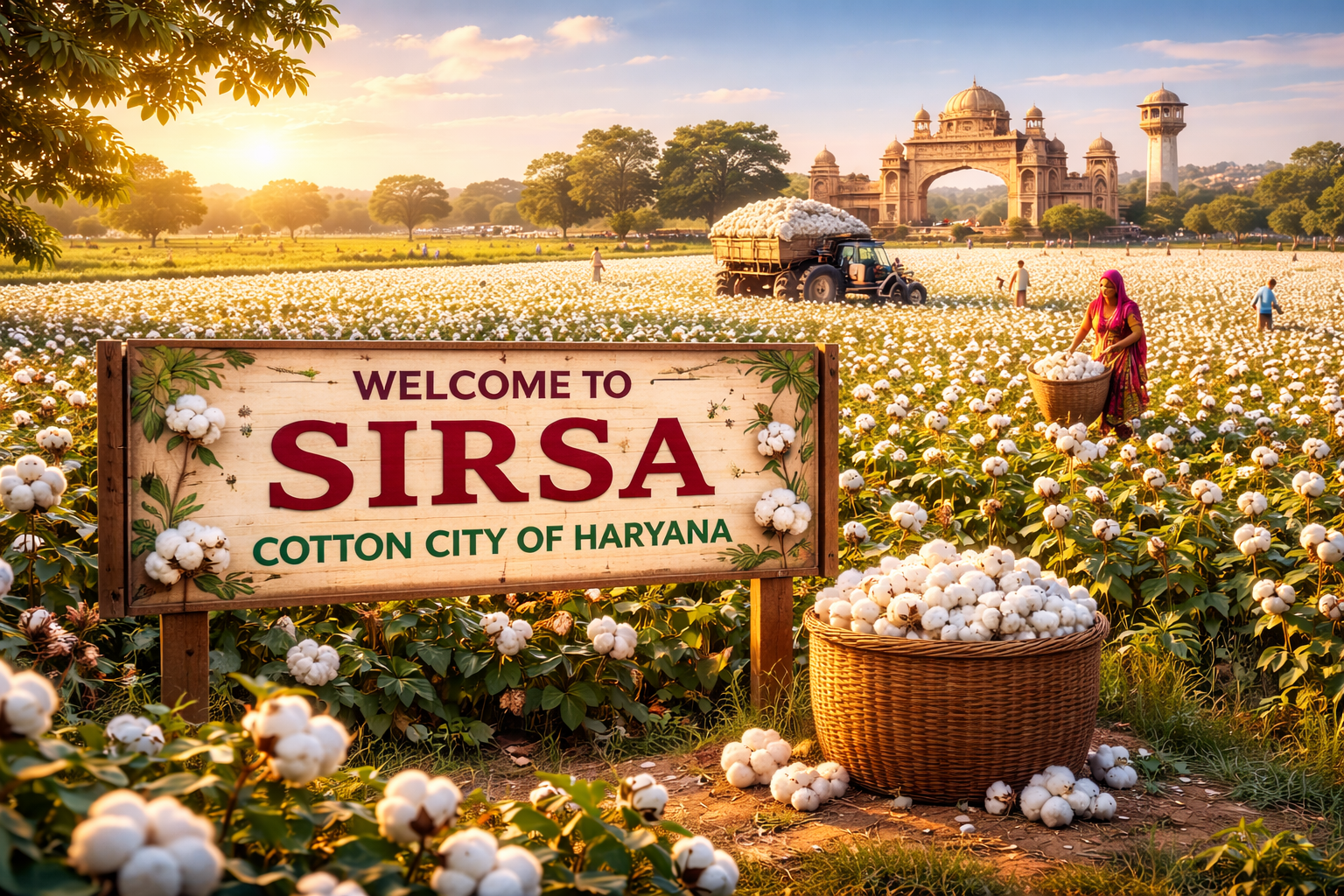
Cotton City of Haryana
Sirsa is proudly known as the “Cotton City of Haryana” due to its large-scale cotton production and strong agricultural economy. Located in the fertile plains of Haryana, the district has ideal soil and climate conditions that support high-quality cotton farming.
Vast cotton fields surround the city, especially during the harvesting season when white cotton bolls cover the land like a soft blanket. Cotton farming plays a major role in the livelihood of local farmers and contributes significantly to the state’s economy. Sirsa has numerous cotton markets (mandis) and ginning factories that process and trade cotton across different parts of India.
Glance Of Sirsa
Population
272,000
Area
28 sq. km
Economy
50 Thousand crores
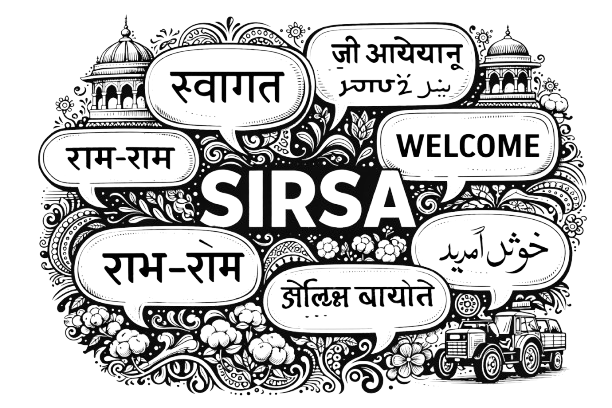
Multiple languages
Hindi, Haryanvi, Panjabi, Bagri
Why Connect With US
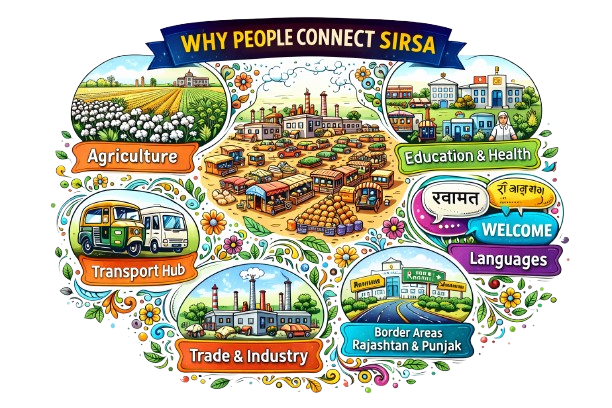
People connect with Sirsa because it represents a strong blend of tradition, opportunity, and community life. The city is deeply rooted in agriculture, especially cotton farming, which supports many families and shapes its identity. Its strategic location near the borders of Punjab and Rajasthan makes it an important center for trade and transportation, attracting people from surrounding regions.
Sirsa also offers educational institutions, healthcare facilities, and growing business opportunities, making it a practical and promising place to live. The peaceful environment, cultural diversity, and simple lifestyle create a strong emotional connection among residents. With its welcoming nature and steady development, Sirsa continues to draw people who seek stability, growth, and a sense of belonging.